Wednesday Feb 24th- LESSON: Kneel Level, Ground Level, Shoulder Level Shots

**NEW** DAILY ATTENDANCE QUESTION**
1) CLICK TO ANSWER DAILY ATTENDANCE QUESTION
- Click Student Login
- Type in Room # 310569
- Type in your Last Name, (then) First Name
- Answer Daily Attendance Question

WEEKLY ZOOM CLASS MEETING WILL BE ON FRIDAY (2/26) THIS WEEK AT 10AM or 1PM

Watch the three video’s as part of the Greatness Studio Starters 1) Bell Ringer Video 2) CNN 10 News 3) Motivational Video
BELL RINGER: CLICK TO WATCH VIDEO
CNN 10:CLICK TO WATCH CNN 10
MOTIVATIONAL MESSAGE OF THE DAY: CLICK TO WATCH VIDEO

Watch, Listen, Read everything in the Lesson below.
LESSON: Kneel Level, Ground Level, Shoulder Level Shots
VIDEO: CLICK TO WATCH
POWERPOINT: CLICK TO READ AND REVIEW
MORE INFORMATION: CLICK TO READ AND REVIEW
MORE INFORMATION #2: CLICK TO READ AND REVIEW
LESSON NOTES:
Knee Level Shot
This is when your camera height is about as low as your subject’s knees. They can emphasize a character’s superiority if paired with a low angle. It’s not as extreme as a ground level shot but it gets the same feeling across. These are ideal when you want to focus on characters walking, or in this case from Home Alone, creeping.
Here’s an example of the knee level camera angle:

Knee Level Shot • Home Alone
GROUND LEVEL SHOT EXAMPLE
Ground Level Shot
A ground level shot is when your camera’s height is on ground level with your subject. This camera angle is used a lot to feature a character walking without revealing their face, but it can help to make the viewer more active and use the actor’s performance to build an idea.
Here’s an example of the ground level camera angle:
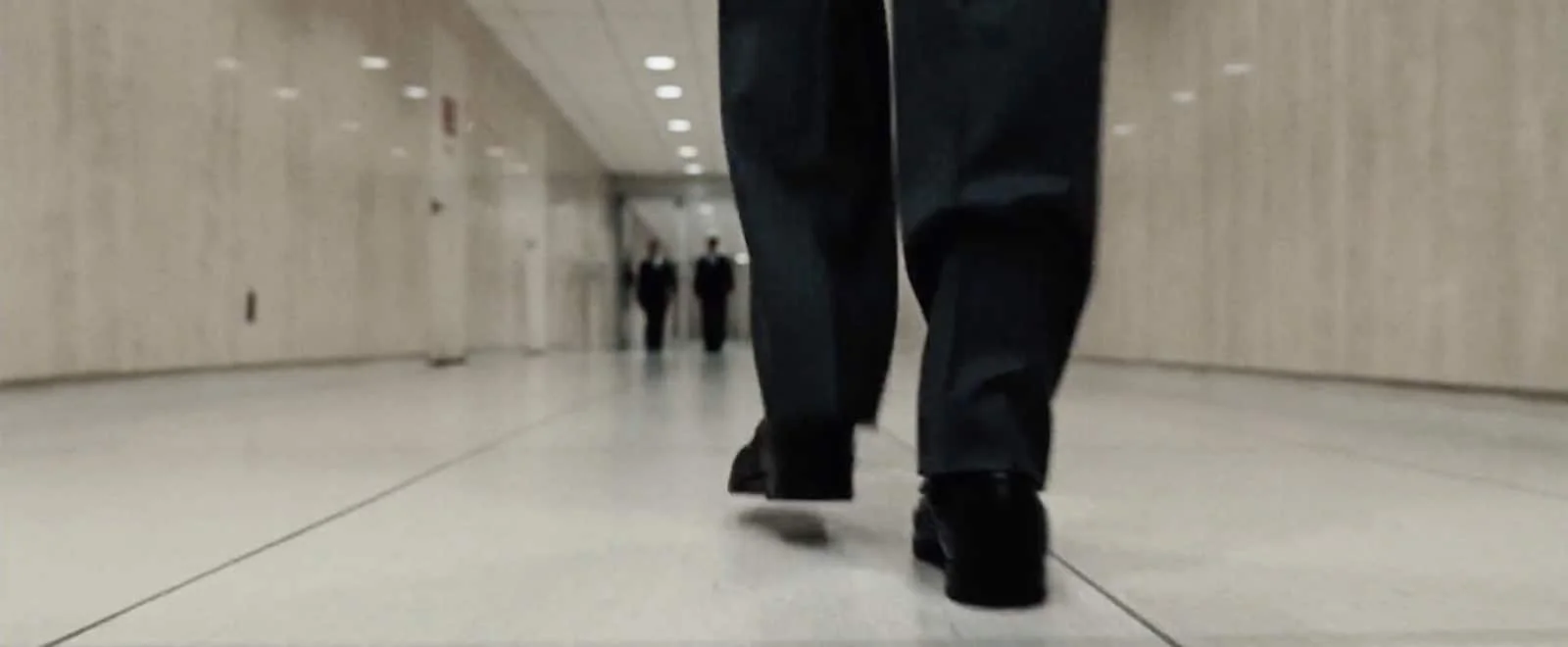
Ground Level Shot Example • Burn After Reading
Worm’s-eye View
Photographing from below is sometimes referred to as “worm’s-eye view”, as if you were a worm looking up at the world around you. As you can imagine, this makes all subjects look very large, even if they are very small in reality. As opposed to images shot from above, subjects presented in this way look as though they hold power over the viewer, and can seem very intimidating. By photographing a subject from a worm’s eye view, you automatically make the viewer feel vulnerable, even if the subject itself isn’t frightening.

Photo by Mark Liebenberg
In the photograph of the flower, you really feel as though you are laying on the ground, looking up at monstrous plants. So this is what it feels like to be a bug! Getting down on the ground allows you to see scenes that you wouldn’t ordinarily experience in your everyday life.
1. CONVEYING POWER
The first function of low-angle shots is to convey power, and it depicts both the good and the bad kind of power.
The very first example in the video is Nosferatu, a classic movie from 1922. Thanks to low-angle shots, the vampire seems more powerful in the frame. Many filmmakers use low-angle shots to present frightening and intimidating scenes, filming the vicious characters from down below.
However, low-angle shots can also be used to convey a heroic kind of power, not just the intimidating kind. Filming a subject just a bit below the eye level makes them look heroic, powerful and grand.
2. CONVEYING VULNERABILITY
You will agree that this is quite different from conveying power. However, some filmmakers have used the low-angle shots to make their characters seem vulnerable. In the video, you can see an example from Citizen Kane, showing failure and vulnerability after lost elections. The floor and the ceiling can be seen in some of the frames, which gives the sense of entrapment.
3. POWER + VULNERABILITY
So, low-angle shots can make your subject seem powerful, or exactly the opposite. As if this weren’t weird enough, sometimes it can combine both in the same shot.
SHOULDER LEVEL SHOT EXAMPLE
Shoulder Level Shot
A shoulder level shot is a camera angle that is as high as your subject’s shoulders. Shoulder level shots are actually much more standard than an eye level shot, which can make your actor seem shorter than reality.
Here’s an example of the shoulder level camera angle:
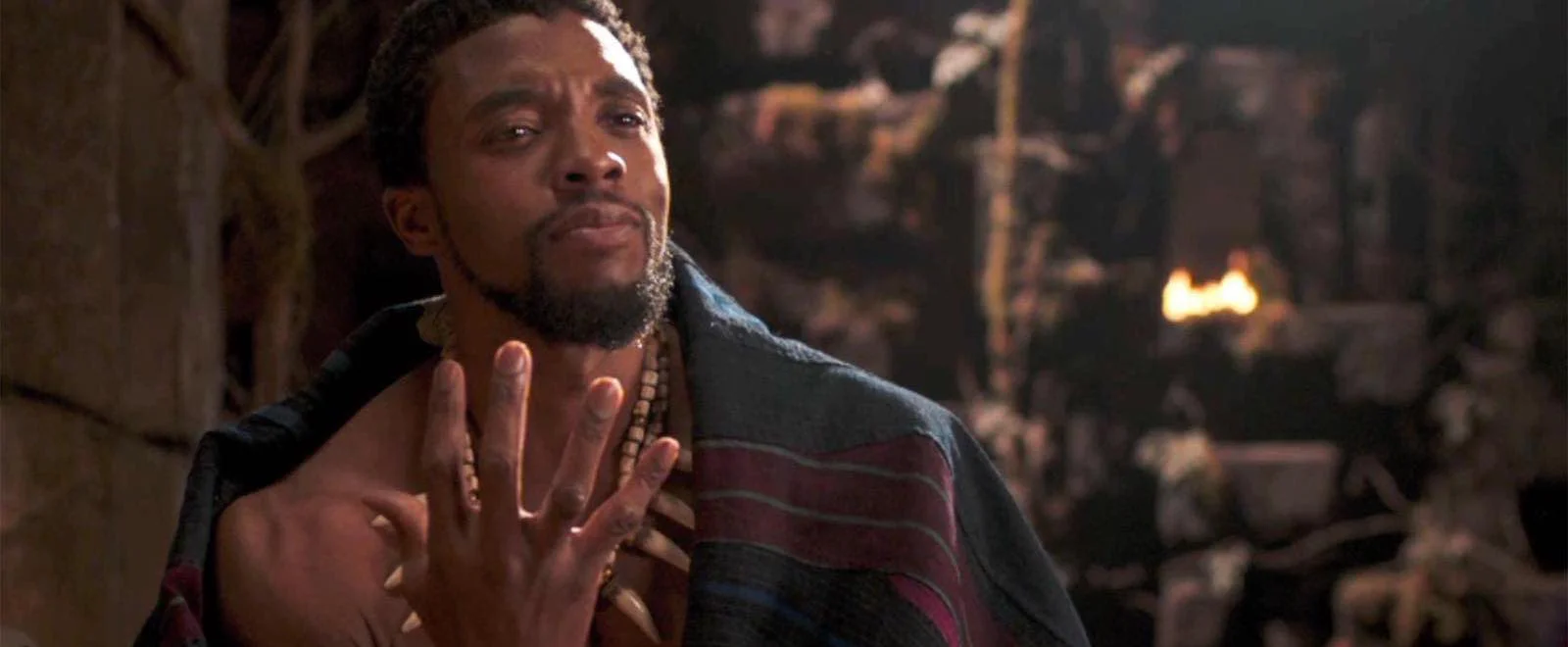
Shoulder Level Shot • Black Panther
Because the camera is aligned with the shoulder, it allows the actor’s head to reach the top of the frame (reducing head room). It also places the actor’s eye-line slightly above the camera, and, in turn, the illusion of a slightly lower angle.