Tuesday February 23rd- LESSON: The Cowboy Shot or Hip Level Shot

**NEW** DAILY ATTENDANCE QUESTION**
1) CLICK TO ANSWER DAILY ATTENDANCE QUESTION
- Click Student Login
- Type in Room # 310569
- Type in your Last Name, (then) First Name
- Answer Daily Attendance Question
Watch the three video’s as part of the Greatness Studio Starters 1) Bell Ringer Video 2) CNN 10 News 3) Motivational Video
BELL RINGER: CLICK TO WATCH VIDEO
CNN 10:CLICK TO WATCH CNN 10
MOTIVATIONAL MESSAGE OF THE DAY: CLICK TO WATCH VIDEO

Watch, Listen, Read everything in the Lesson below.
LESSON: The Cowboy Shot or Hip Level Shot
VIDEO: CLICK TO WATCH
POWERPOINT: CLICK TO READ AND REVIEW
MORE INFORMATION: CLICK TO READ AND REVIEW
LESSON NOTES:
The Cowboy Shot or Hip Level Shot
A Cowboy shot is when your camera is roughly waist-high. Hip level shots are often useful when one subject is seated while the other stands.
Hip level shots can also be extremely useful camera angles for when you have action that occurs near the hip, like weapons being drawn, or someone reaching into their pocket. That’s why it’s also known as a “cowboy shot” — we can’t think of hip level shots without seeing a gun, holster, and the enemy ahead in the distance.
Here’s an example of the hip level camera angle:
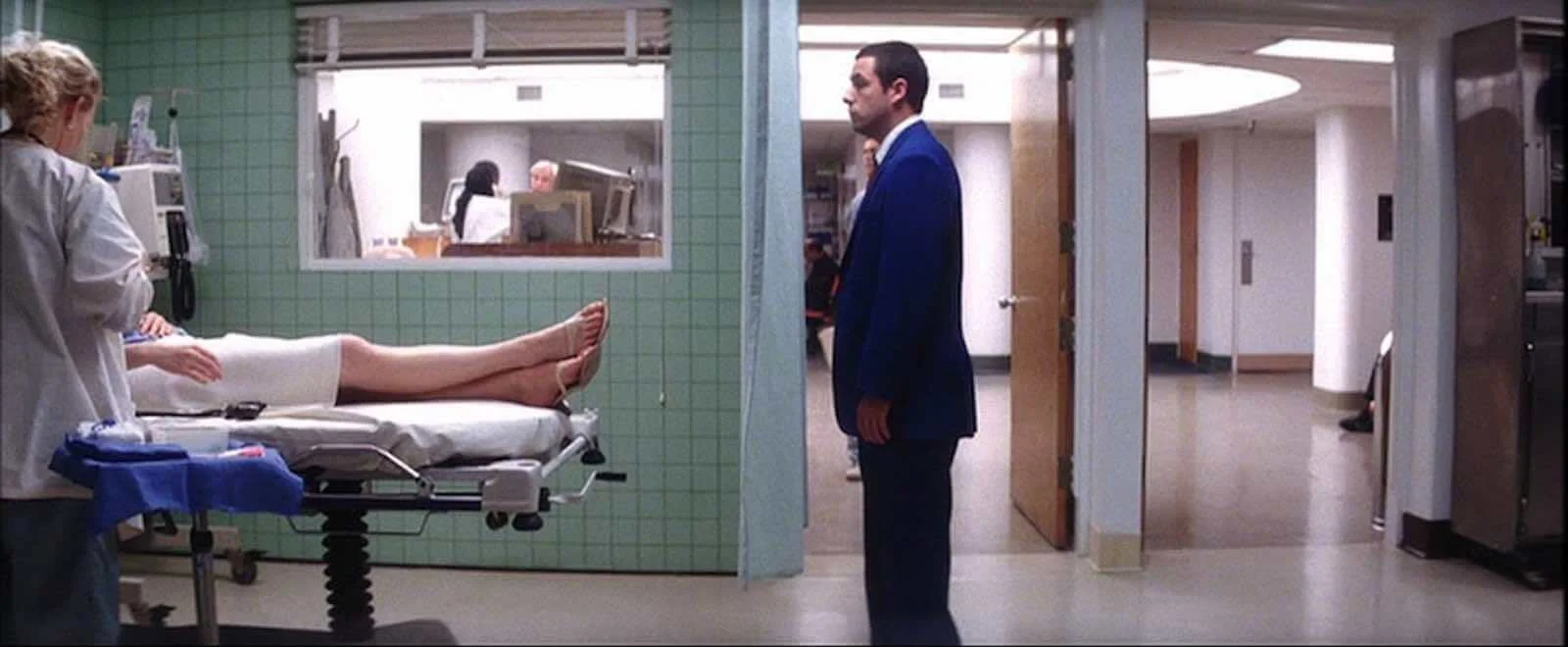
Hip Level Shot Example • Punch-Drunk Love
The further away you get from the subject, like in this moment from Punch-Drunk Love, to keep the subject framed with proper head room, a hip level shot will get the job done.
Cowboy shots are something we see all the time in film and television. When should you use one in your film? Which feelings will a Cowboy shot generate inside your viewer?
COWBOY SHOT BASICS
1. What is a Cowboy shot?
Cowboy shots are a bit larger than a medium shot, but just smaller than a full or wide shot. It is called a “cowboy shot” because it was used in old westerns to frame a gunslinger’s gun or holster from the hip up.
We see the character from the hip up, in a superior position, while still staying wide enough to show other important elements in the scene. Let’s start by understanding what this shot actually looks like, explore some modern examples, and see why we might want to use it in our own projects.
Take a look below for the anatomy of shot sizes:
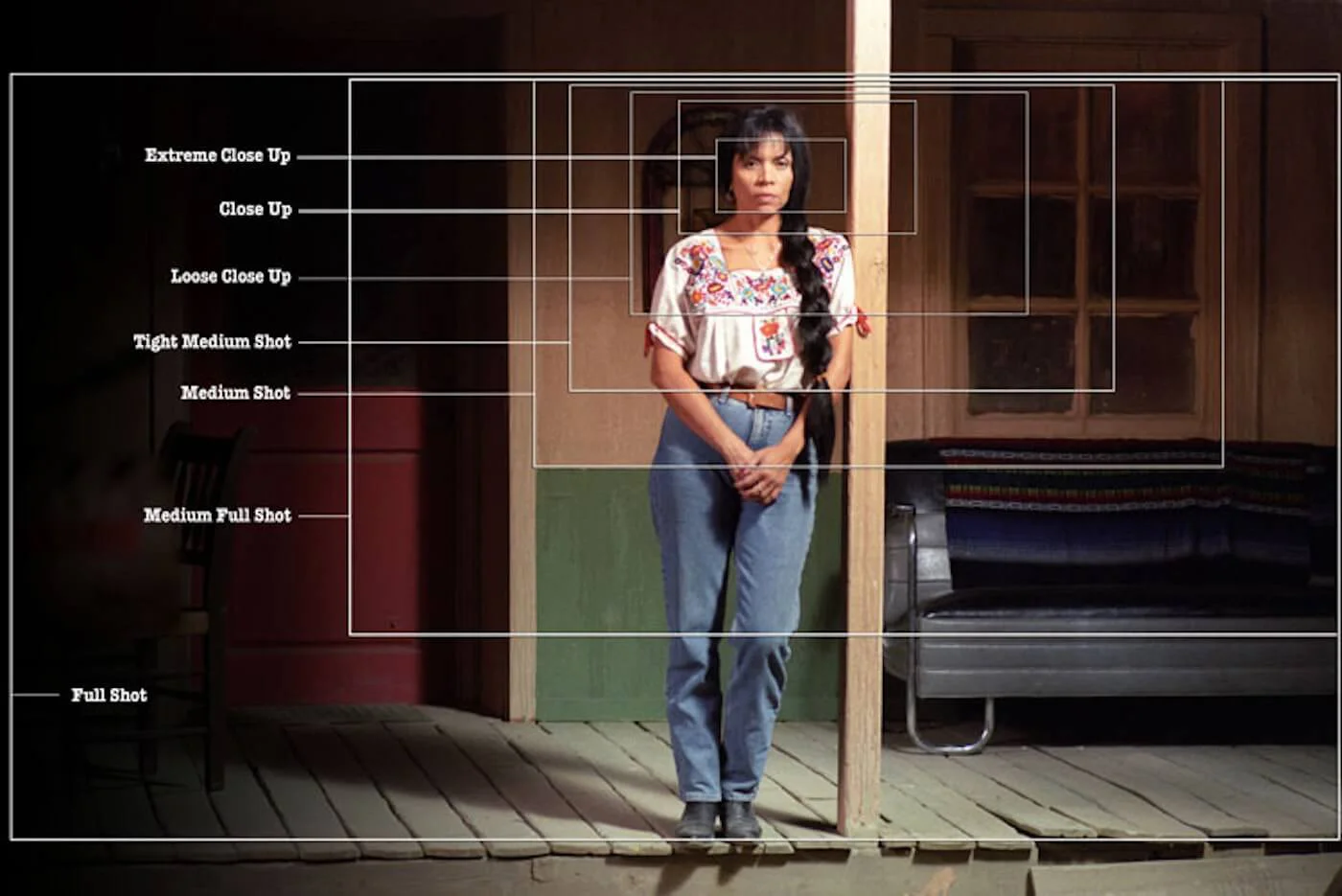
Different Types of Camera Shots
Different types of shots are employed for specific reasons. “Cowboy” shots in cinema are a great way for filmmakers to tell a story, especially when those stories deal with heroism and confident characters. Because they fit into that sweet spot, they are incredibly useful for both creative and practical reasons.
COWBOY SHOT DEFINITION
What is a cowboy shot?
A Cowboy Shot (sometimes called an American shot) is a shot framed from the actor’s mid-waist to right above their head. Many times the camera is placed at hip level as well, to give a slightly low angle to the shot. The reason the filmmaker won’t go completely back to a full shot is so the audience can still register some of the emotion on the actor’s face.
The idea of a Cowboy shot is to present the actor in a heroic, confident fashion while also allowing the viewer to see action taking place around the actor’s waistline, often to see guns or swords drawn.
WHY DO DIRECTORS USE COWBOY SHOTS?
- To signal heroism and confidence.
- To remain close enough to register emotion.
- To show critical action that takes place near the hip.
There is quite a bit of psychology behind the cowboy shot because it places the most vulnerable portions of the human body in the frame.
The context of your shot can change very quickly based on your actor’s facial expressions and the narrative of your story.
We won’t harp on old westerns, but we couldn’t not show you a Clint Eastwood Cowboy shot. It’s a great example of the initial intention of these kinds of shots in film-superiority and confidence.
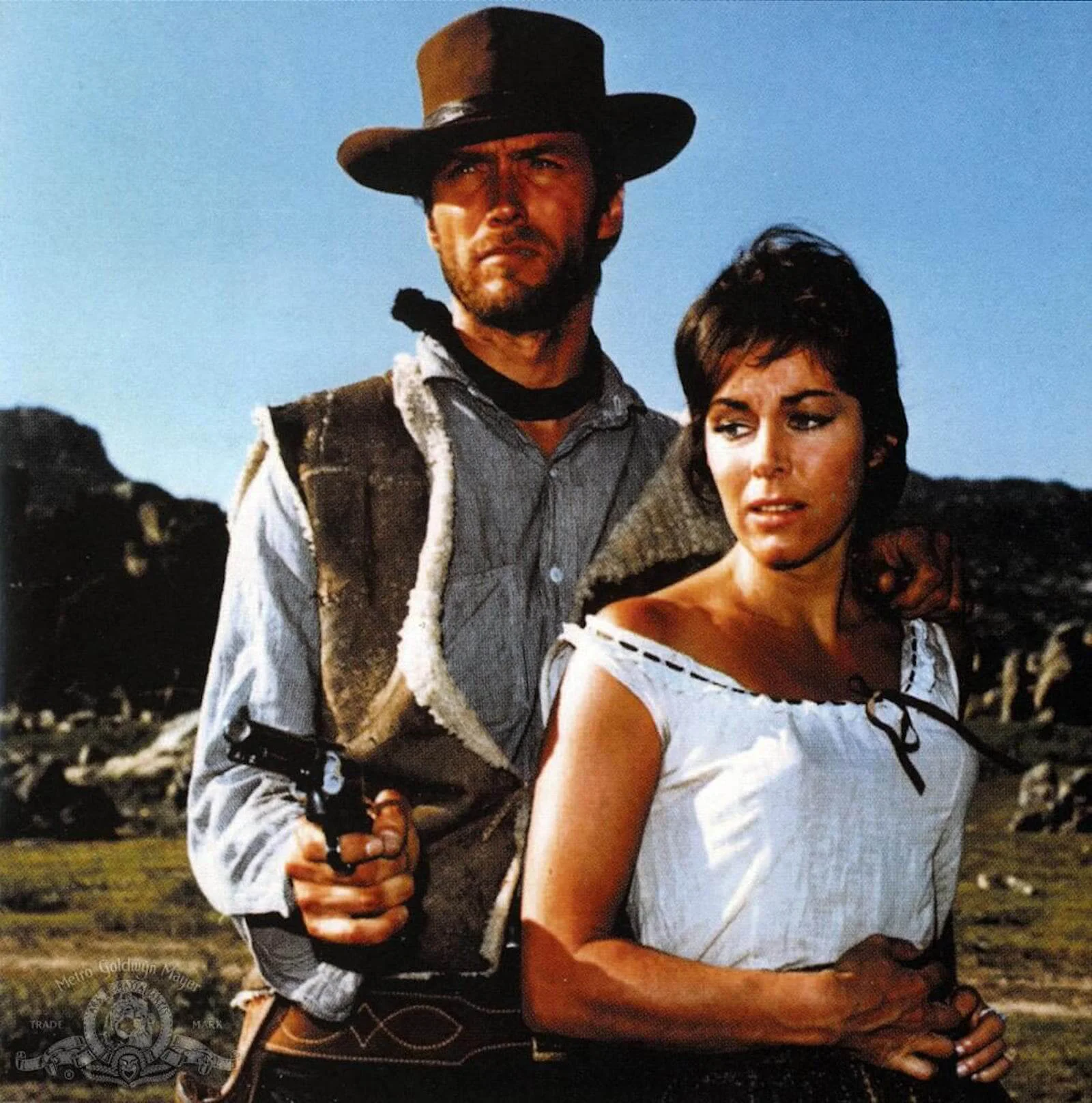
Clint and Marianne Koch in A Fistful of Dollars
Sergio Lione’s, A Fistful of Dollars, uses this shot to show the dominance of Clint throughout the film. But, by the look of Marianne’s face, the shot also signals fear and danger ahead.
Let’s dive into some more recent examples and see how Cowboy shots keep up with today’s more complex narratives.
CAMERA SHOTS AT WORK
2. Modern cowboy shots in film
We could make an entire post showing you nothing but photos of Clint Eastwood and John Wayne, and while initially helpful, that wouldn’t be exciting, or current.
Instead, we’ll show you modern cowboy shots that are used outside of the western genre. And hopefully, inspire some ideas for your own shot lists.
Here is a cowboy shot in Pulp Fiction.
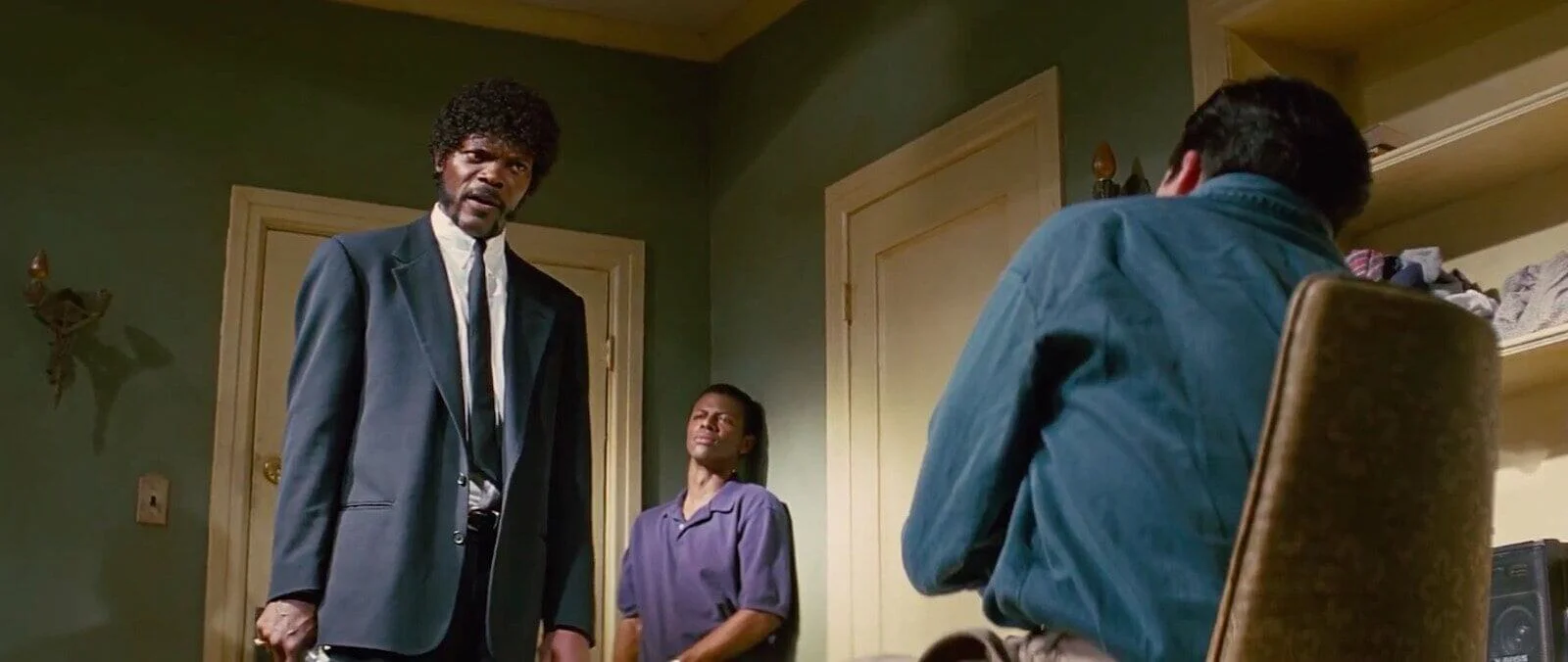
Samuel L. Jackson in a modern Cowboy shot
You’ll notice that Jules has his gun in frame so that we can track the action, but this shot is also placed at a low angle. This helps to keep Brett’s body in frame, and has the added benefit of empowering Jules. These types of shots boost the tension without anyone having to say a word.
This cowboy shot in Fight Club, exists with a different intention. It focuses on comparison rather than superior positioning.
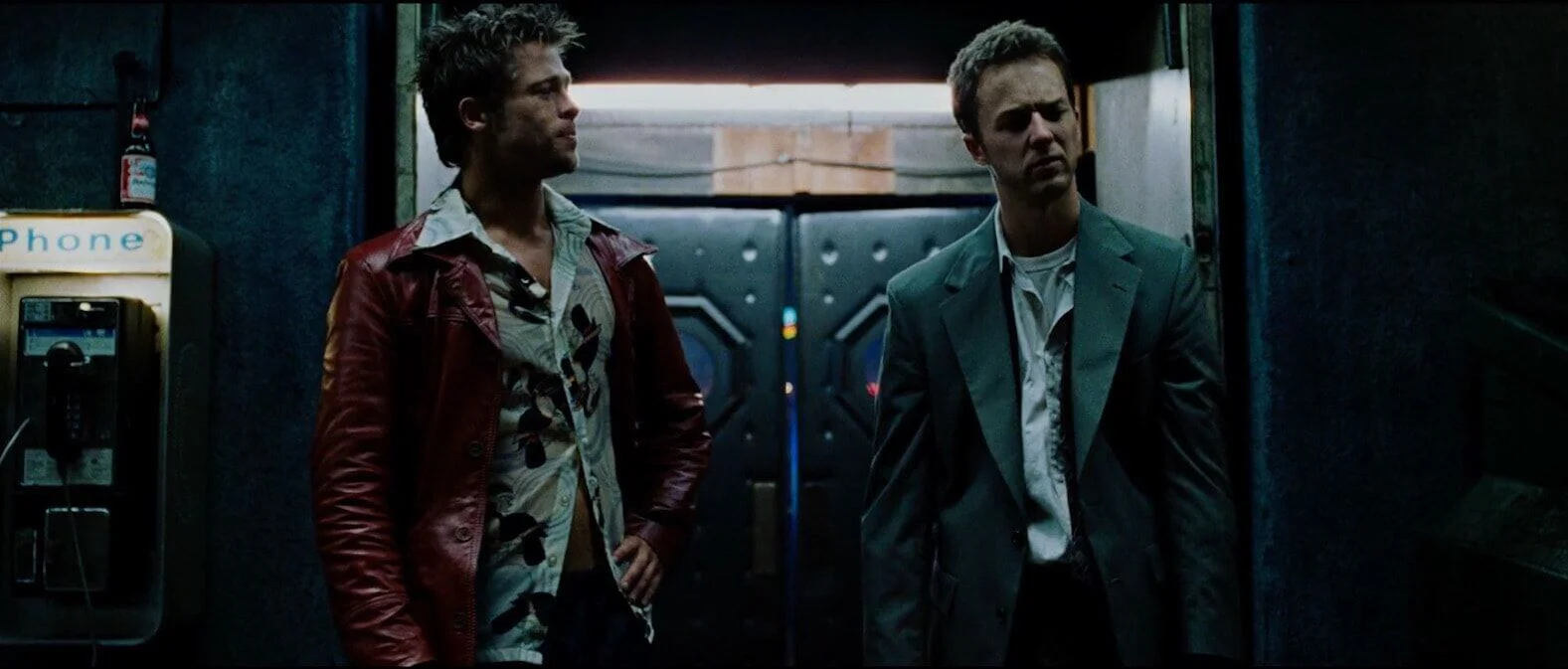
Different types of Shots: Modern Cowboy in Fight Club
This shot of Brad Pitt and Edward Norton is less about displaying any kind of heroism. Brad Pitt’s character stands with certainty and style, while Norton’s slumps in a ragged suit. Here, the Cowboy shot captures how very different the two characters are from one another- in appearance and mentality.
And of course, if you’ve seen the movie, that idea makes for a very interesting story considering who they are to one another.
A second Fight Club example is a more traditional, as the position of Brad is more in line with the standard Cowboy shot.
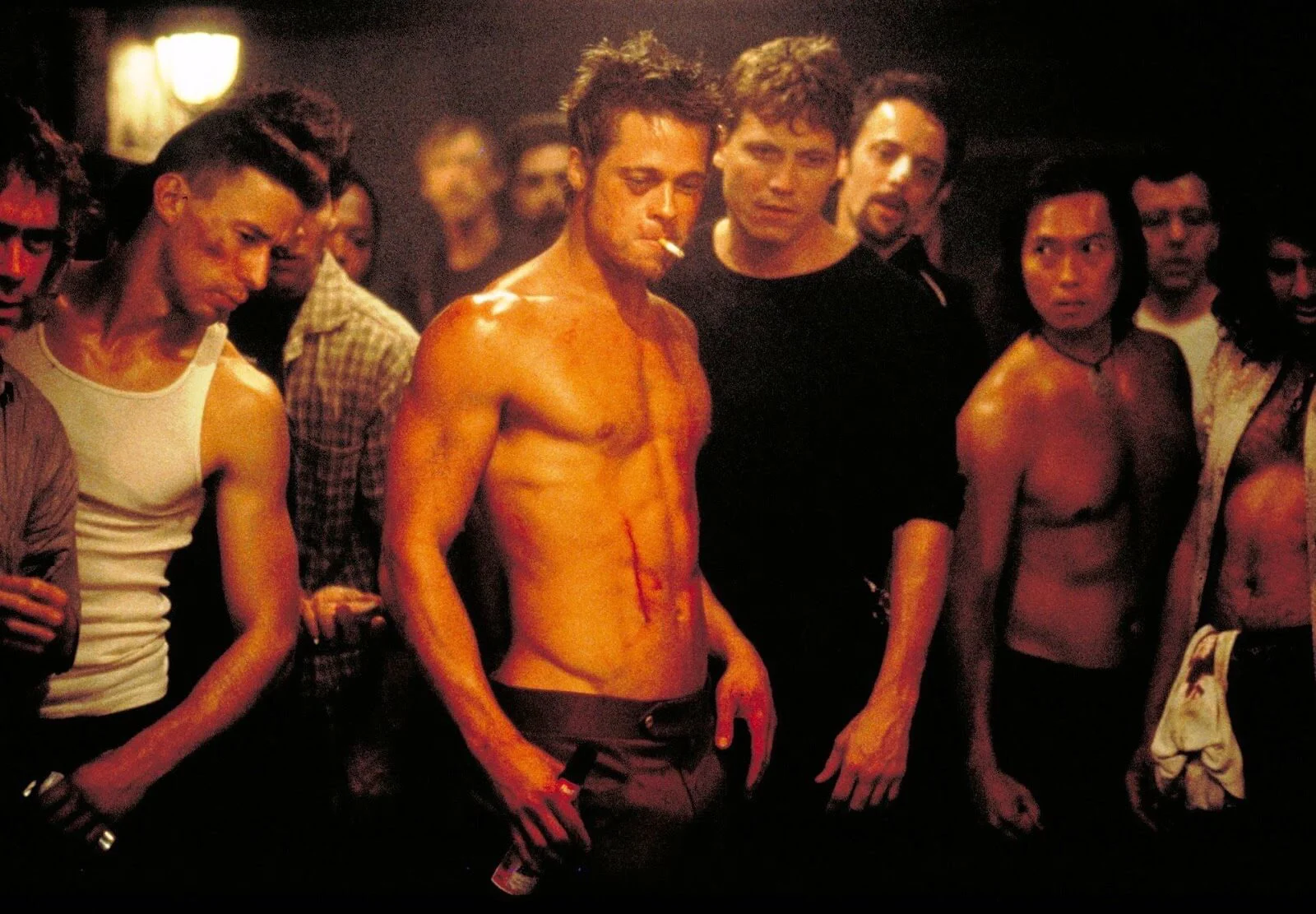
Brad Pitt in a modern Cowboy shot
It is a wide enough shot to see he is surrounded by the fight club, still standing after a bloodied beatdown, and looking down at his opponent. It establishes his superiority over his opponent and displays his raw toughness in a single shot, all the while providing a strong juxtaposition as Ed Norton’s split personality.
Let’s take a look at an example from The Dark Knight:
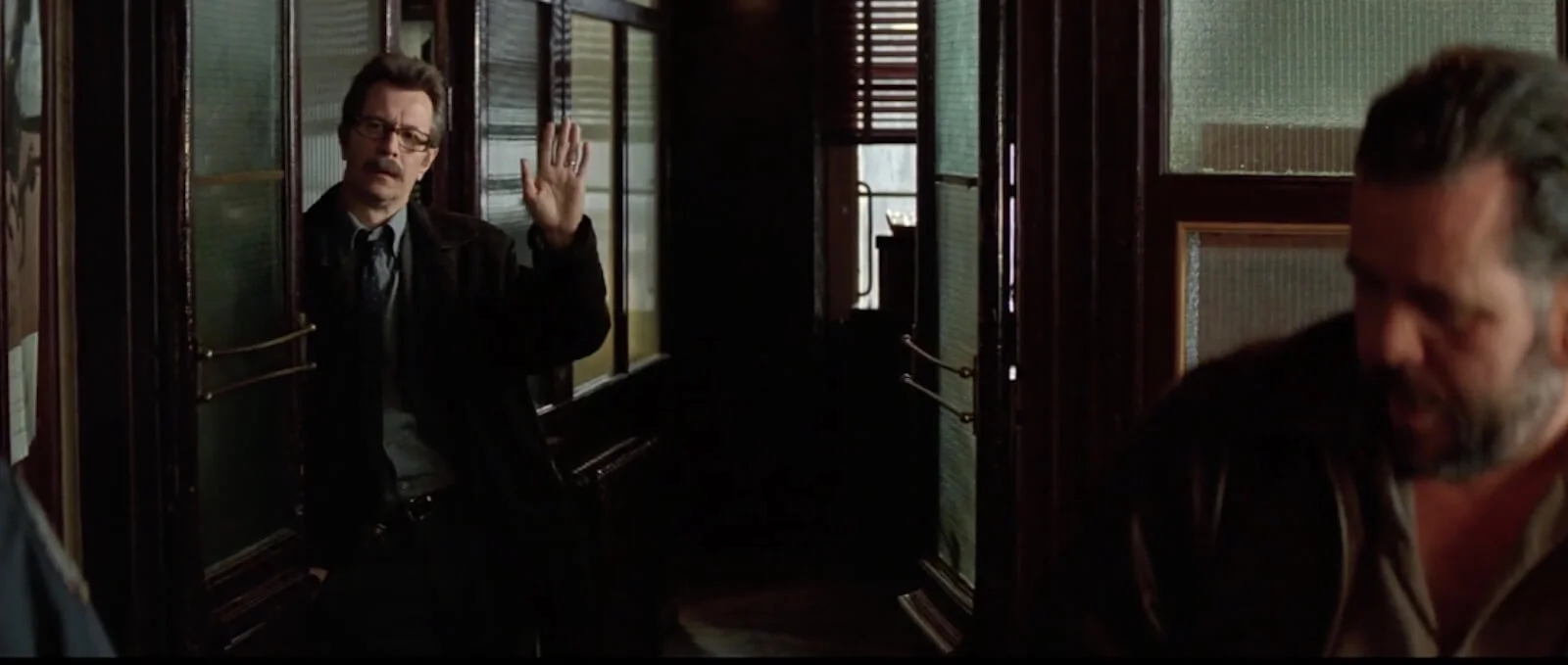
Camera Shots: Cowboy Framing in The Dark Knight
What is so interesting about this one is that the cowboy shot is still being used for a heroic effect, but because Gordon is not part of the group.
He is positioned far from the cops because that is the case philosophically for Jim Gordon in this film – and the cowboy shot framing helps to support his renegade style.
Finally, we reach the most common usage of the modern cowboy shot in blockbuster films, and that is…. the superhero shot.
Here is a cowboy shot from Wonder Woman:
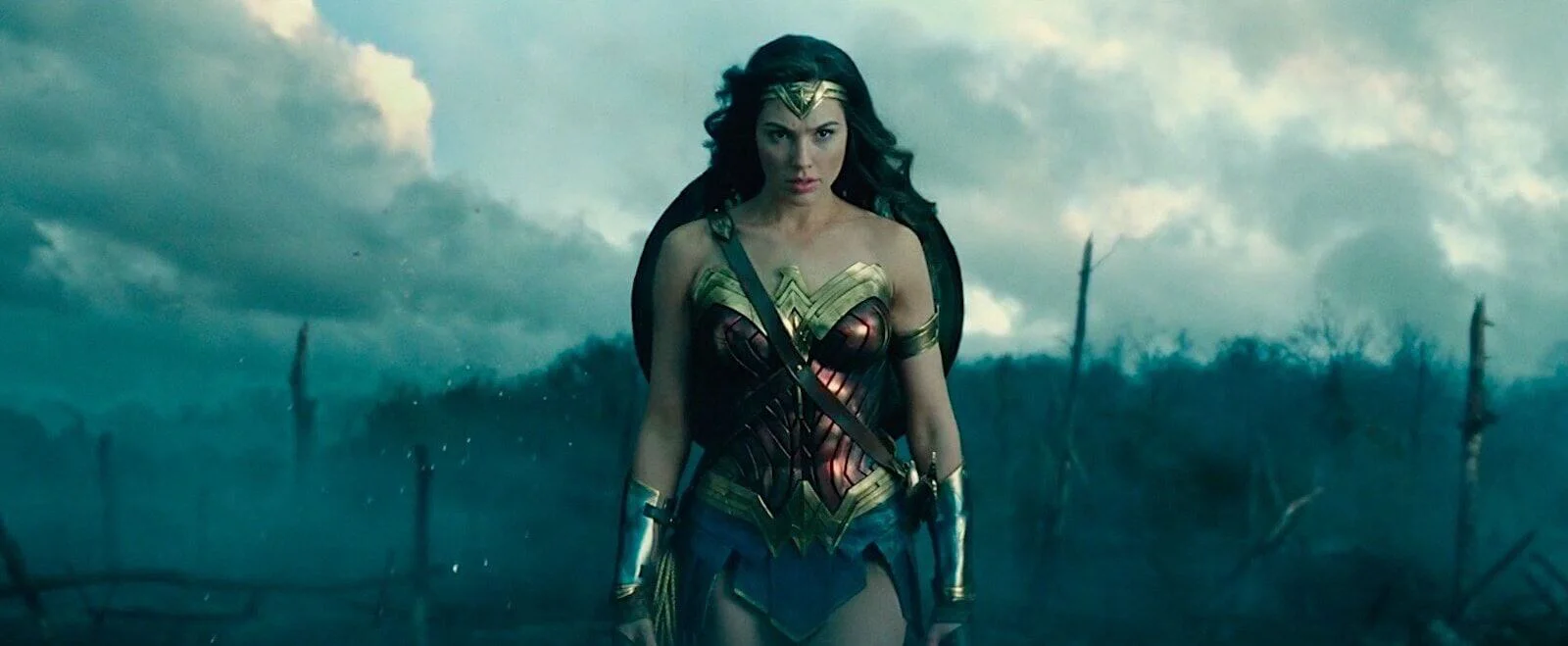
Power Cowboy Shot in Full Effect
We get to see Diana’s power, costume, and swagger on full display. The inspirational feeling we get while watching her reflect bullets off of her arm bracers is heightened by this powerful shot.

- What is a Cowboy Shot?
- Why do directors use Cowboys Shots?
- What is a hip level shot?
- How did the Cowboy Shot get it’s name?