Wednesday Feb 3rd- LESSON: HANDHELD CAMERA MOVEMENT

**NEW** DAILY ATTENDANCE QUESTION**
1) CLICK TO ANSWER DAILY ATTENDANCE QUESTION
- Click Student Login
- Type in Room # 310569
- Type in your Last Name, (then) First Name
- Answer Daily Attendance Question

Watch the three video’s as part of the Greatness Studio Starters 1) Bell Ringer Video 2) CNN 10 News 3) Motivational Video
BELL RINGER:CLICK TO WATCH VIDEO
CNN 10:CLICK TO WATCH CNN 10
MOTIVATIONAL MESSAGE OF THE DAY: CLICK TO WATCH VIDEO

ZOOM CLASS MEETING TOMORROW THURSDAY FEB 4th
10AM and 1PM

Watch, Listen, Read everything in the Lesson below.
LESSON: HANDHELD CAMERA MOVEMENT
VIDEO: CLICK TO RE-WATCH VIDEO FROM EARLIER LESSON
POWERPOINT: CLICK TO READ AND REVIEW
MORE INFORMATION: CLICK TO READ AND REVIEW
LESSON NOTES:
WHAT IS HANDHELD CAMERA MOVEMENT?
Random Movement
Sometimes, camera movements are not motivated by character actions, but rather audience experience. Filmmakers often add random movement to a shot via camera shake through a handheld shot to heighten the intensity of a scene.
When used more subtly, the random movement can establish subjectivity for the audience. This is often used in films that are based on true events. In combination with arbitrary zooms, the random movement , documentary feel to the film.
Random movement can be over used, so be sure to use it with intention and restraint if necessary. Too much of it and the random movement will be ineffective. Too little and it will go unnoticed. The random movement should always serve the story.
Cematographers and filmmakers have depended on camera support mechanisms since the beginning of cinema. With tripods, dollies, and cranes, the mechanisms to support a camera have evolved. One method, however, relies on none of these mechanisms and has only grown more relevant with time. The handheld shot. It’s important to understand how filmmakers have utilized the handheld shot to achieve more than just a stylized look, but rather a psychological effect. Before we answer the why and how let’s first address the what. What is handheld camera movement?
HANDHELD CAMERA MOVEMENT DEFINITION
First, let’s define handheld shot
The handheld shot is notorious for being the overly shaky cam used in modern action films. But filmmakers have utilized it, tweaked it, and innovated the shot in new ways to help them tell their story. From shaky cams, to shoulder mounts and easy rigs, the handheld shot is a type of shooting that does not rely on a fixed camera position.
Handheld shots in movies more recently can be found anywhere from low-budget indie films to big blockbuster movies. Why has the handheld shot grown in mainstream popularity if it has always been available to use? How does a handheld shot affect a story?
Although there may be different variations of the handheld shot, let’s begin with a handheld camera shot definition.
HANDHELD CAMERA MOVEMENT DEFINITION
What is a handheld shot?
A handheld shot is a shot taken with the camera being supported only by the operator’s hands and shoulder. Handheld camera work entails camera shake from the operator’s movements. According to the hand held camera definition, the shot relies only on the operator’s body. However, over time as cameras have evolved and grown, operators have utilized a few rigs to achieve the same effects of a handheld shot.
Depending on the camera’s weight and size, operators also utilize minimal rigs such as a shoulder mount or easy-rig to ease the physical burden of an operator as well as give them more control over the amount of camera shake.
THE FIRST HANDHELD CAMERA MOVIES
The history of the handheld shot
The handheld shot can be found in plenty of mainstream movies today. Early films relied on firm, static shots from cameras mounted to fixed tripods. Many critics and filmmakers have thought of the handheld shot as an artistic venture.
Filmmakers have experimented with handheld shots as early as 1925. It wasn’t until the ’60s that handheld camera movies entered the mainstream in a significant way.
Experimental filmmaker Jonas Mekas defended the handheld shot as a technique that allowed for greater artistic and financial freedom. Most famously, Jean-Luc Godard, a pioneer of the French New Wave, used the handheld shot at a time when the technique was considered unorthodox.
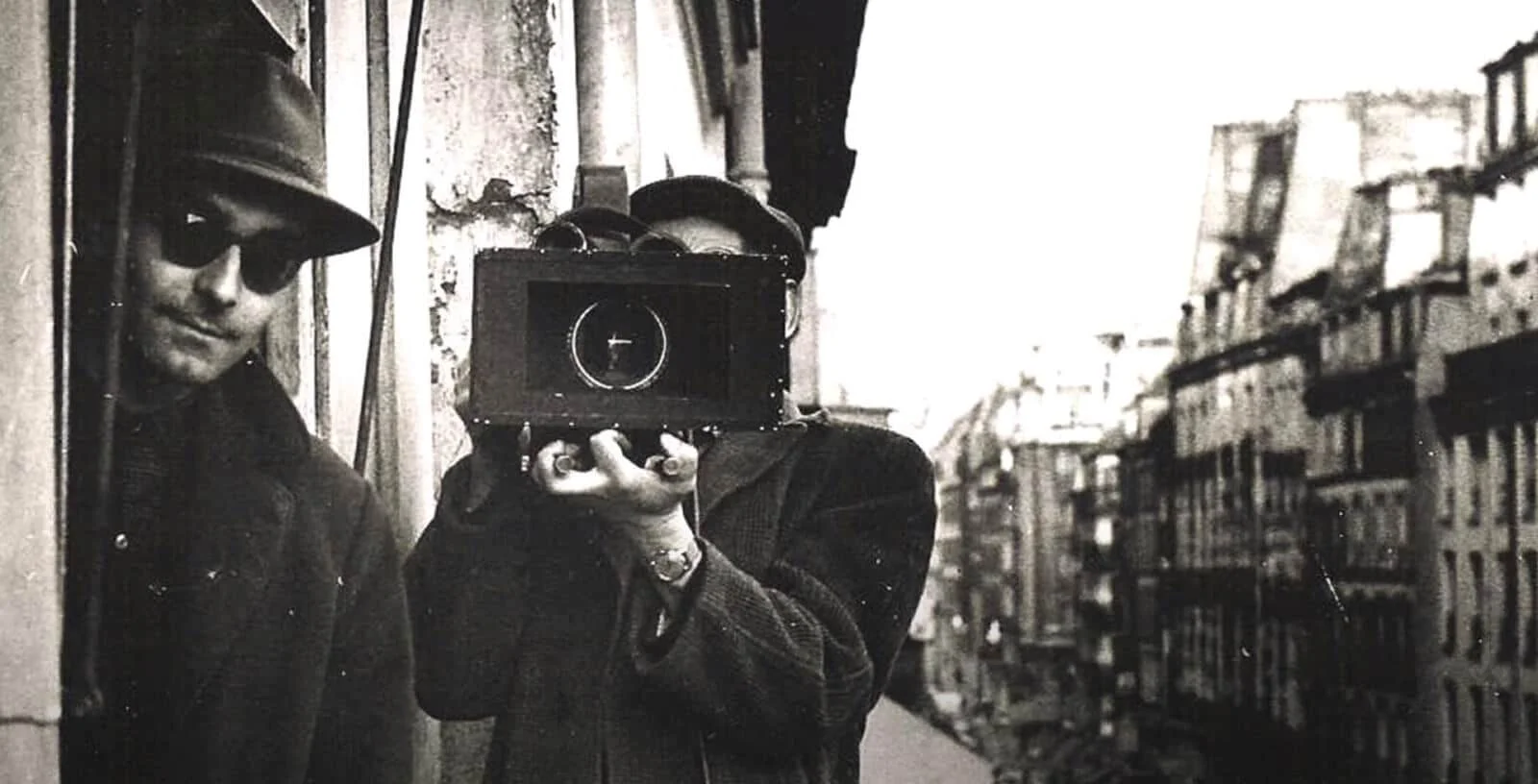
Jean-Luc Godard & Shooting Handheld
Godard’s most notable film, and an iconic handheld shot example, is Breathless. Godard’s use of both hand held shots and jump cuts were both a point of criticism and praise. The film would go on to influence an entire generation of filmmakers.
CLICK TO WATCH EXAMPLE FILM WITH ICONIC HANDHELD SHOT
While Godard’s handheld camera work in Breathless holds as a classic handheld shot example within the history of cinema, the technique itself began to truly evolve in the 1980s.
’80S EVOLUTION
The origins of “shaky cam”
The term “shaky cam” was coined and used more predominantly in films for a more psychological effect. Most famously, director Sam Raimi utilized a camera that was bolted to a piece of lumber in his 1981 horror Evil Dead. The shaky cam rig, as it was called, was held up by two Grips as they ran down a city block.
The result was a shot that complemented the intensity of the scene and influenced future handheld camera movies.
The rig was so effective both creatively and financially that it was adopted by the Coen Brothers in films such as Raising Arizona.
Throughout the ’80s and ’90s, handheld camera movies started to become more apparent in the mainstream. Filmmakers utilized the handheld shot and shaky cam across genres to create more subjective shots or to heighten the intensity of a scene.
Handheld camera movies started to appear throughout the industry. Filmmakers like Woody Allen, Steven Spielberg, and more recently Paul Greengrass have used the handheld shot for its storytelling capabilities.
The handheld shot has become a point of criticism in action films that overuse handheld camera work. Filmmakers still find brilliant ways to utilize the handheld shot by being selective and intentional with their shots. Let’s analyze a few uses of the handheld shot that elevate a scene and some handheld shot examples that demonstrate each.

Answer the questions below and send to Mr. Schoener
- What is a handheld shot?
- Why would you use a handheld shot in a film?
- In a few lines, give the history of the handheld shot?
- What is shaky cam? Why would you use it?