Thursday February 18th- LESSON: Eye Level Shot

**NEW** DAILY ATTENDANCE QUESTION**
1) CLICK TO ANSWER DAILY ATTENDANCE QUESTION
- Click Student Login
- Type in Room # 310569
- Type in your Last Name, (then) First Name
- Answer Daily Attendance Question

Weekly ZOOM CLASS MEETING TODAY (THURSDAY FEB 18th)
10AM
1PM

Watch the three video’s as part of the Greatness Studio Starters 1) Bell Ringer Video 2) CNN 10 News 3) Motivational Video
BELL RINGER: CLICK TO WATCH VIDEO
CNN 10:CLICK TO WATCH CNN 10
MOTIVATIONAL MESSAGE OF THE DAY: CLICK TO WATCH VIDEO

Watch, Listen, Read everything in the Lesson below.
Camera Angles Explained: The Different Types of Camera Shot Angles in Film
LESSON: Eye Level Shot
VIDEO: CLICK TO WATCH VIDEO
POWERPOINT: CLICK TO READ AND REVIEW
MORE INFORMATION: CLICK TO READ AND REVIEW
LESSON NOTES:
You’re looking for a list of the different camera angles in film, but you also want great examples that come with clear explanations of when and why to use specific camera shot angles. Whether you want your characters to seem powerful, vulnerable, or intimate, the power of camera angles cannot be understated.
Camera Shot Angle Overview
It’s not enough to just understand shot size. Camera angles, and degree of those angles, can totally change the meaning of a shot. As you prepare your shot list, it helps to remember all the options.
Eye Level Shot
Our first camera angle is the eye level shot, and this is when your subject is at eye-level. An eye level shot can result in a neutral perspective (not superior or inferior). This mimics how we see people in real life — our eye line connecting with theirs, and it can break down boundaries.
Here’s an example of the eye level camera angle:
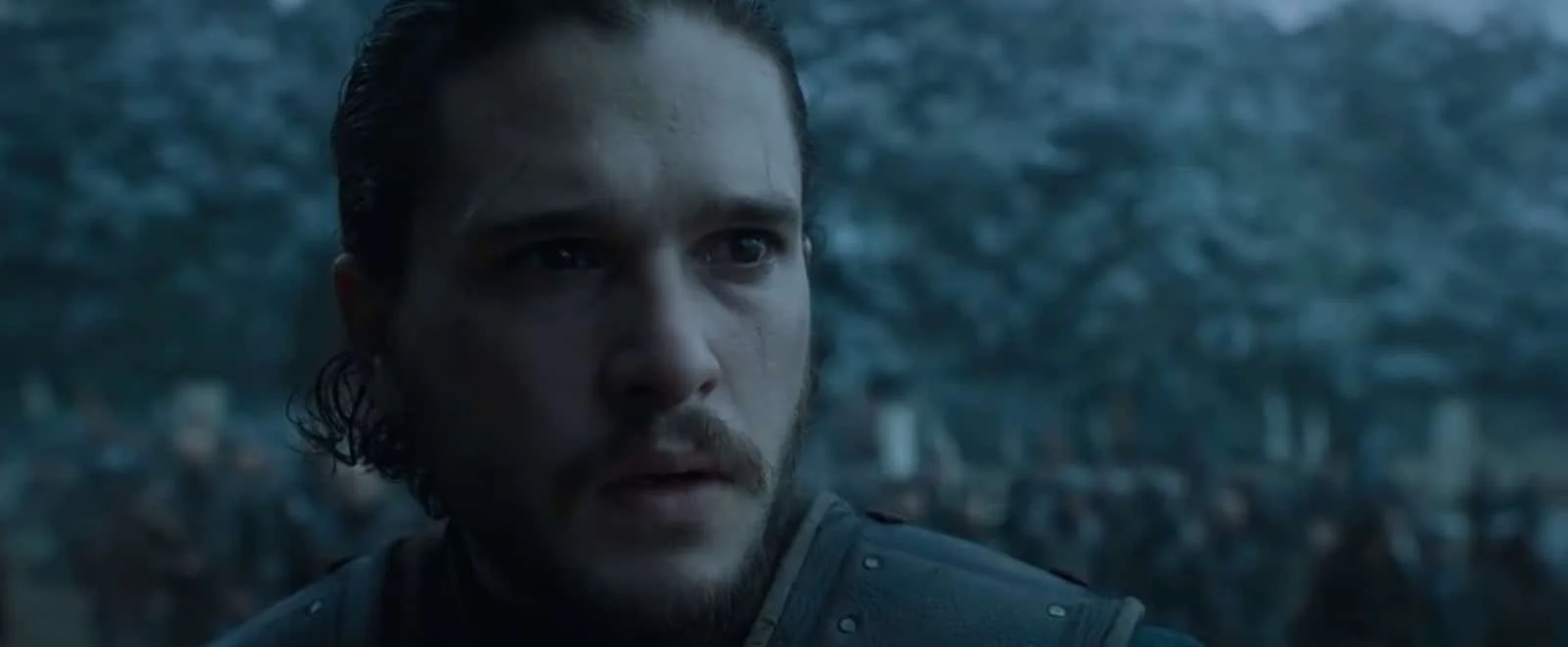
Eye Level Shot Example • Game of Thrones
Eye level shots are actually much less standard than one might initially think, because directors often prefer to place the camera at shoulder level to attain a much more cinematic look.
Most filmmakers understand the cinematic power of a shot with an extreme angle, but what happens when you use standard composition and natural camera level for your shot selections?
We’re going to discuss the eye level shot and go over which emotions are generated with this particular camera angle, and show examples of how an eye level shot can ground your characters and connect your viewer.
1. Eye level shot meaning
Eye level is somewhat self-descriptive, but there is still some nuance to what eye level means, and how it is actually used in film production.
So let’s break it down.
EYE LEVEL SHOT DEFINITION
What is an eye level shot?
An eye level shot refers to when the level of your camera is placed at the same height as the eyes of the characters in your frame. An eye level camera angle does not require the viewer to see the eyes of the actor, nor does the actor need to look directly into the camera for a shot to be considered eye level. Eye level shots simulate standard human vision and thus present visual information through a familiar viewpoint.
The difference between an eye level and shoulder level shot is determined by the middle portion of the frame because the position of the lens iris determines the level of your shot more accurately than the base of your camera body. You may have the base of your camera in line with an actor’s shoulder, but the iris of your camera will be level with the eyes of the actor.
Why do directors use eye level shots?
- Dissolve the barrier between viewer and story.
- Humanize characters with a neutral camera angle.
- Simulate human vision and familiar composition.
Let’s take a look at a few scenes and sequences that used eye level shots effectively, and how there are many opportunities for eye level shots.
EYE LEVEL SHOT EXAMPLES
2. Examples of eye level camera angle
Here you will see scenes that used eye level shots for a specific purpose. Often, directors will use shoulder or hip level angles to slightly empower characters, so an eye level shot is less common than you may think.
In this scene, the filmmakers use a ton of different camera levels and compositions to generate emotions within the viewer.

Battle of the Bastards – Game of Thrones
This scene makes effective use of various angles and shot compositions, and it uses the eye level shot that has great impact.
When Jon Snow realizes Ramsay has his brother on the end of a rope, the filmmakers use this high angle shot to diminish Jon’s power.
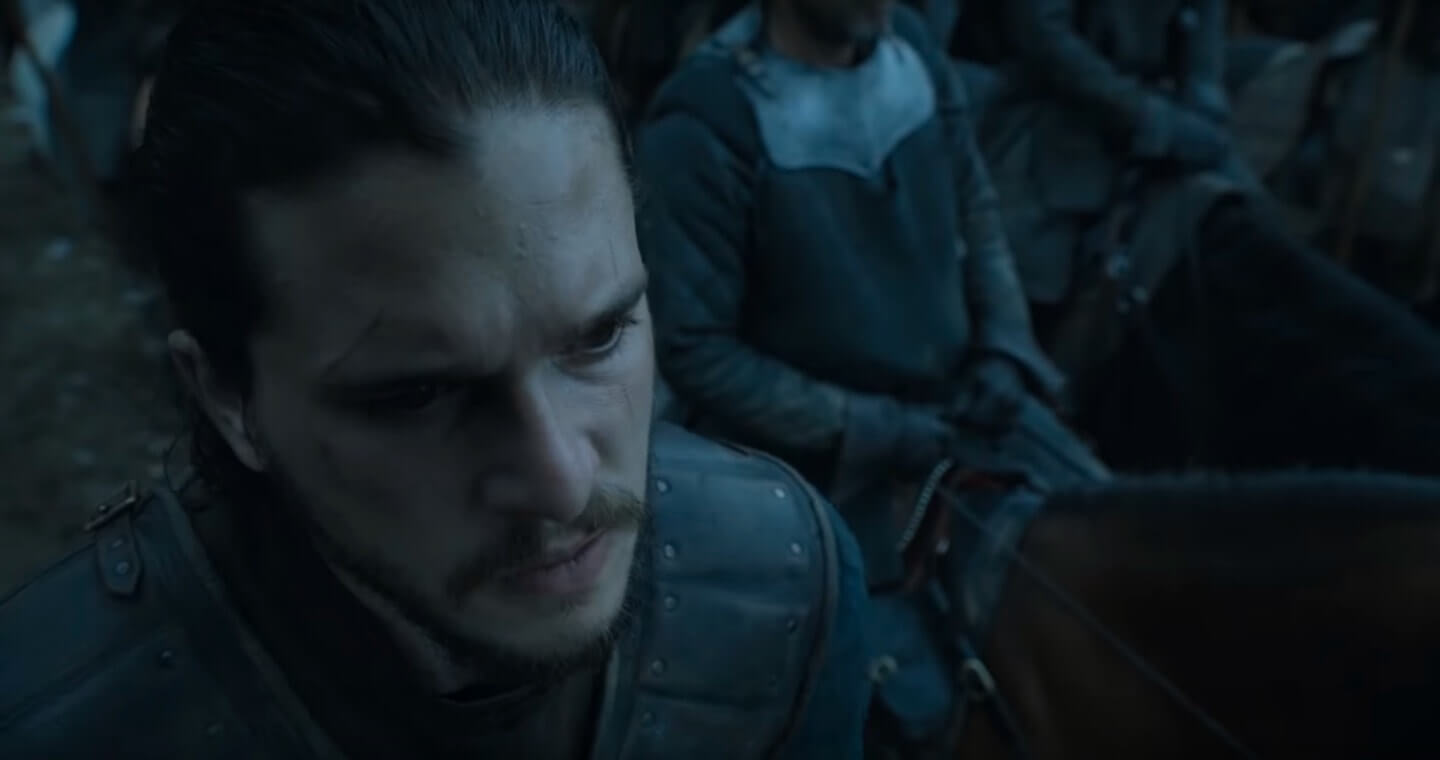
Jon Snow – Game of Thrones
Ramsay has the upper hand, and thus the filmmakers use a slightly low camera angle to empower his position within the conflict.
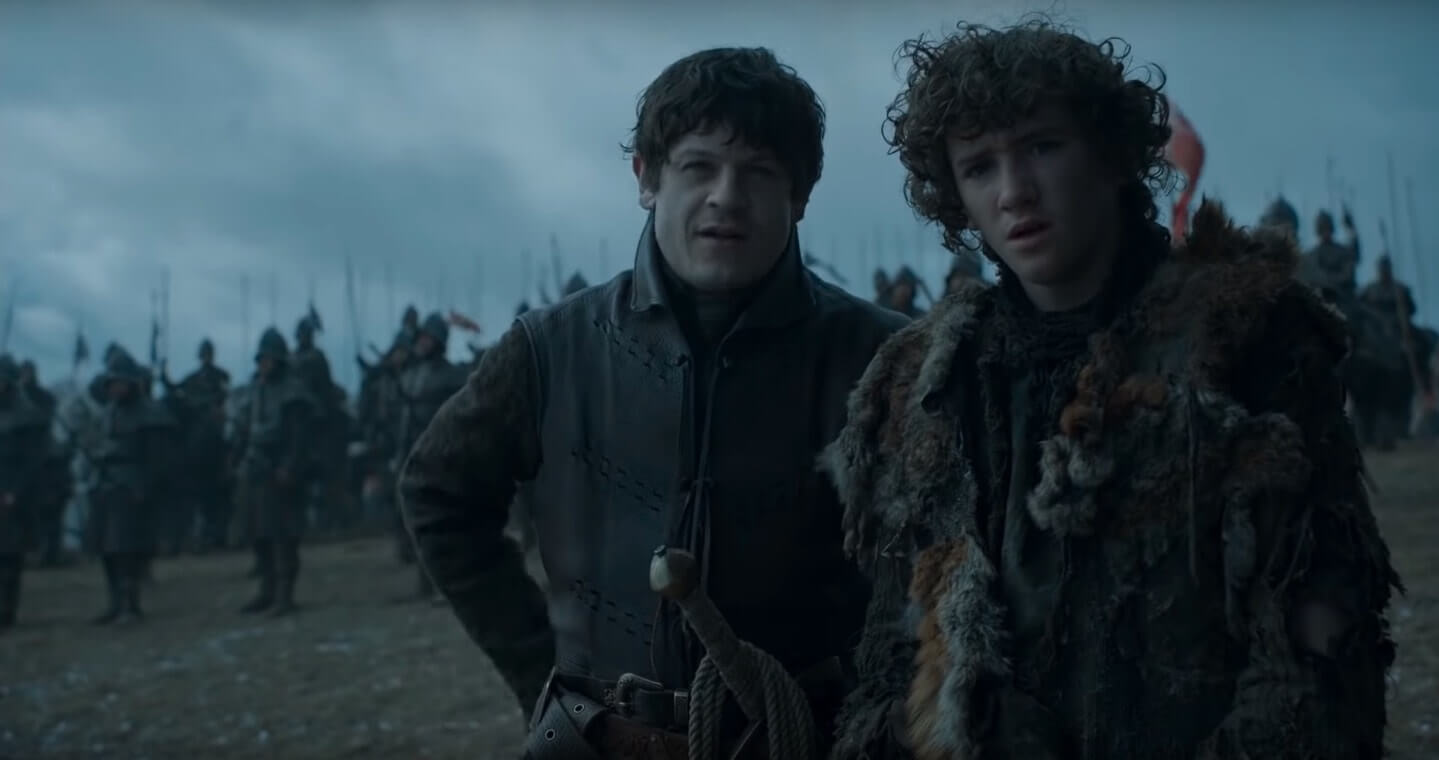
Ramsey with Jon’s brother – Game of Thrones
Jon quickly steps down from his horse and into a close up that is somewhere between eye and shoulder level. His eyes are closer to the middle of the frame than his shoulders, so this is an eye level shot.
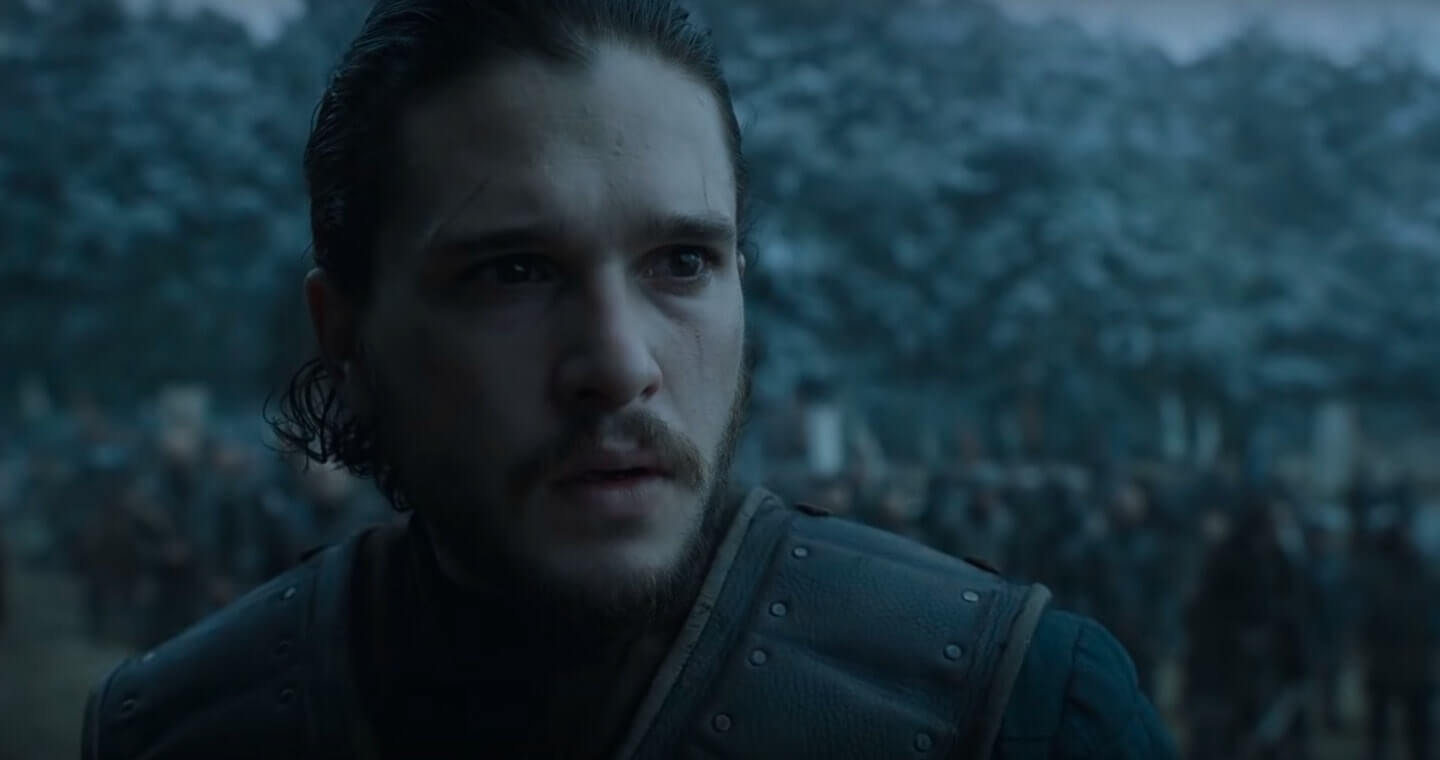
Jon Snow – Game of Thrones
Jon’s concern and emotions are very human at this moment, especially when dealing with someone who is so psychologically inhuman.
The filmmakers further empower Ramsay when he removes his bow.
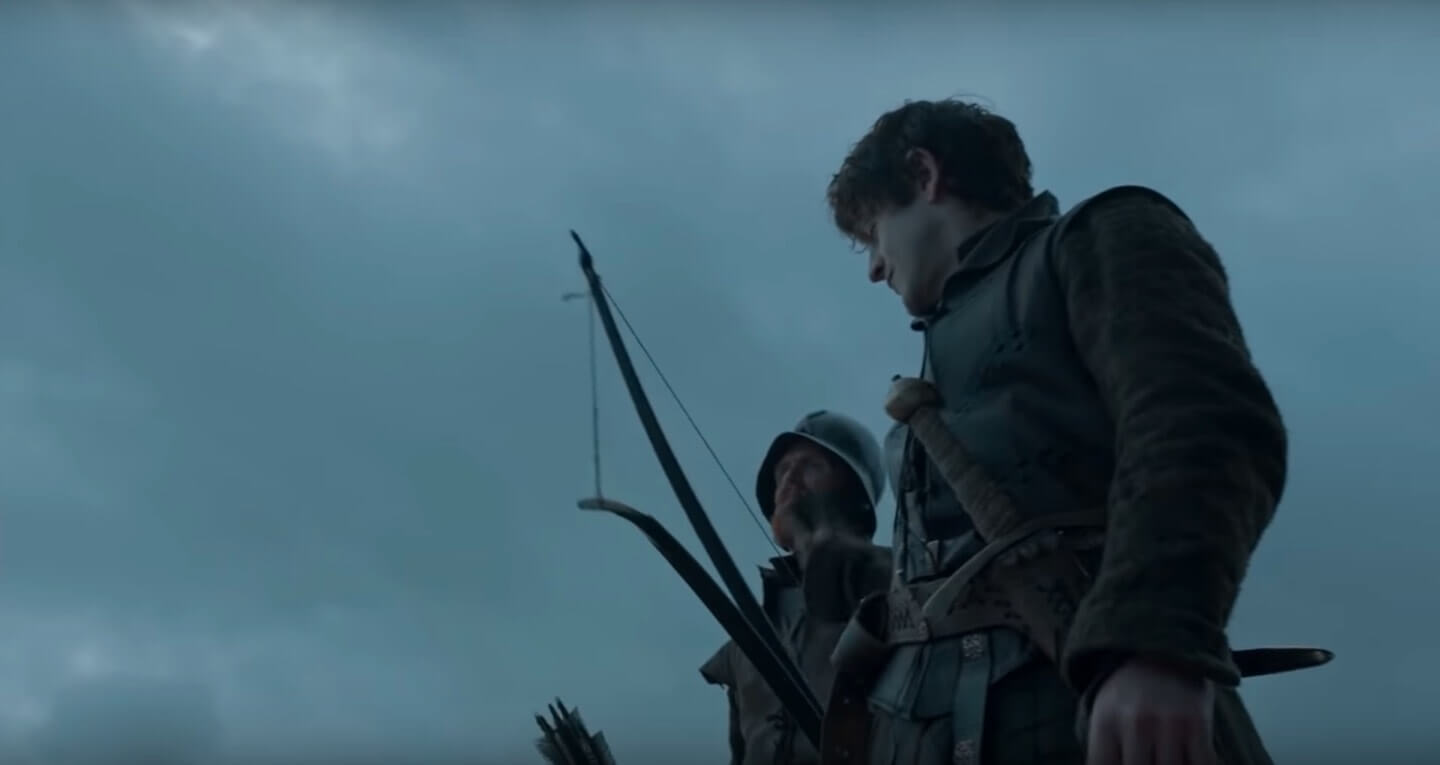
Ramsey – Game of Thrones
The filmmakers use a slight dutch angle paired with a low angle. This cinematic language empowers, but also informs us that this is a villain.
When you use an eye level shot, you can contrast it with other angles to gain much more of an impact. It doesn’t have to be a battle scene either.
How about this introduction sequence from American Psycho?
CLICK TO WATCH VIDEO EXAMPLE FROM AMERICAN PSYCHO

Introduction Sequence – American Psycho
Here we are introduced to the film’s protagonist, but there is no external conflict present. In fact, this is where Director Mary Harron reveals Patrick’s internal conflict, but we need to connect with his thoughts.
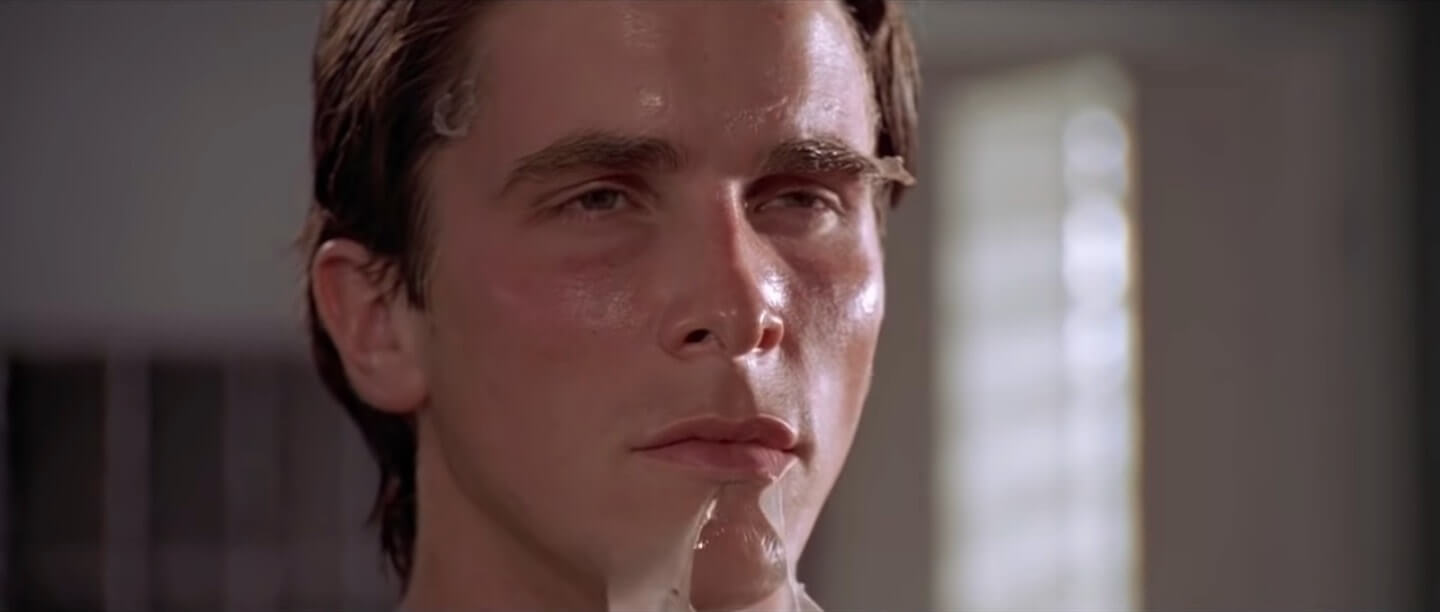
I simply am not there – American Psycho
It seems simple enough, but there are many ways to present a character like this in these introductory moments, so the decision to use eye level is something very much intentional.
Even with the death stare and accompanying narration, we are placed in a situation where we are asked to sympathize and possibly even empathize with the character during a candid and vulnerable moment.
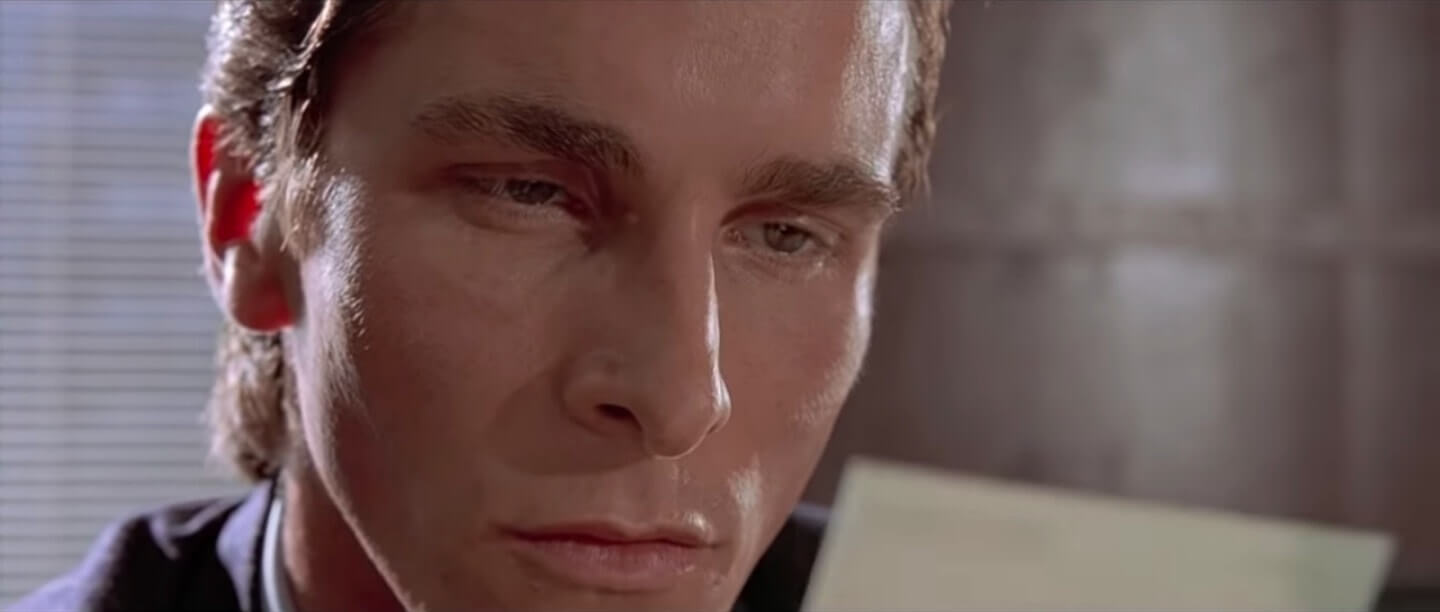
Oh my god… it even has a watermark – American Psycho
The filmmakers use this a lot in American Psycho, and while they don’t hope you’ll justify or rationalize Patrick’s behavior, they do want you to understand it on a personal level.
You should always avoid building a “regular shot” because regular filmmaking is boring. Even your eye level shots should have thoughtful application because they are just as powerful as any other shot level.
EYE LEVEL SHOT EXAMPLES
3. Emotional impact of eye level shots
So which emotions are generated by an eye level shot?
Well, there are many because it’s all dependent on the surrounding imagery and placement within the story.
Generally, eye level shots connect you to the emotions of the character on screen, so whichever emotions they are feeling, hopefully so will you.
You might ask:
Even during moments that are uncomfortable and questionable?
Especially during moments that are uncomfortable and questionable.
WARNING: This next scene has some language and concepts that are not safe for a school environment, but it’s a great scene with true conflict.
I want you to watch and listen very carefully:
CLICK TO WATCH VIDEO EXAMPLE FROM AMERICAN HISTORY

Dinner Scene (NSFW) – American History X
How did watching that scene make you feel?
Do you hate the father? Do you feel like Ed Norton’s character?
Imagine how you’d feel if the father was framed from a high angle or maybe even a dutch angle. Would you thoughtfully contemplate his words and the impact they have on both his son and society?
Would you be so influenced by the cinematic language that the complicated circumstances of the scene would be lost?
If your goal is to build a nuanced scene centered around a controversial and uncomfortable topic, is it more mature and effective to use earnest and neutral shot choices rather than hyper-dynamic camera angles?
Do we gain the opportunity to judge less and contemplate more?
All of the characters in American History X are complex and layered, and that, paired with great acting and thoughtful directing, make up the reasons why it’s such a revolutionary film.
The filmmakers used the eye level shot in a way that is far from standard. Because the power to bridge gaps begins with seeing each other on an equal plane, at eye level.

- What is the purpose of an eye level shot?
2. How do you use eye level?
3. What height is eye level?
4. What is eye level line?